Well! I thought that was great! Thanks, RR! And it raised some important questions. I think that Tolkien has a great moral vision, which is one of the reasons why so many are drawn to his writings. So it would be disturbing indeed if this author's charges are true.
But I think he has made a couple of strategic errors. I'll describe one:
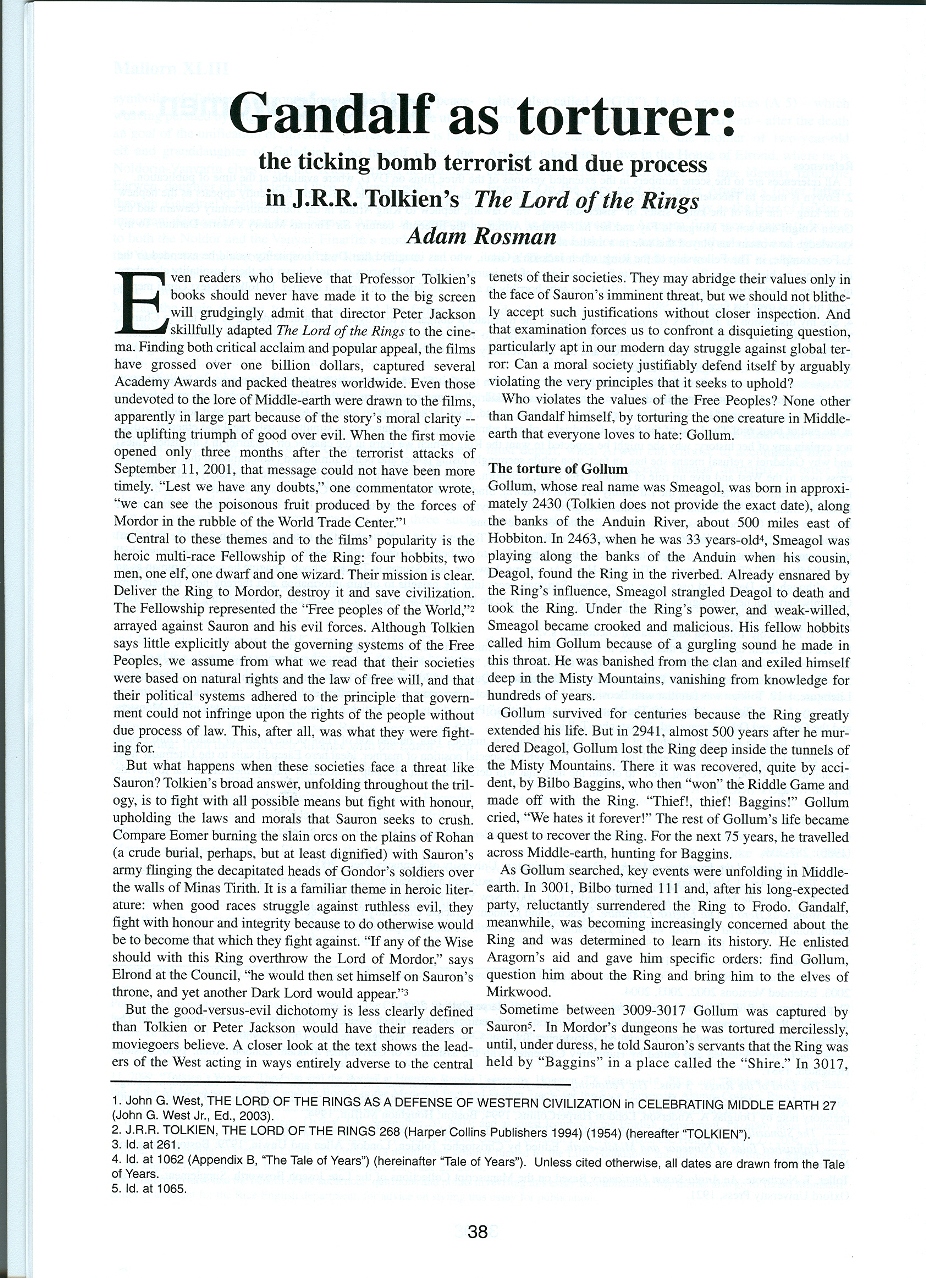
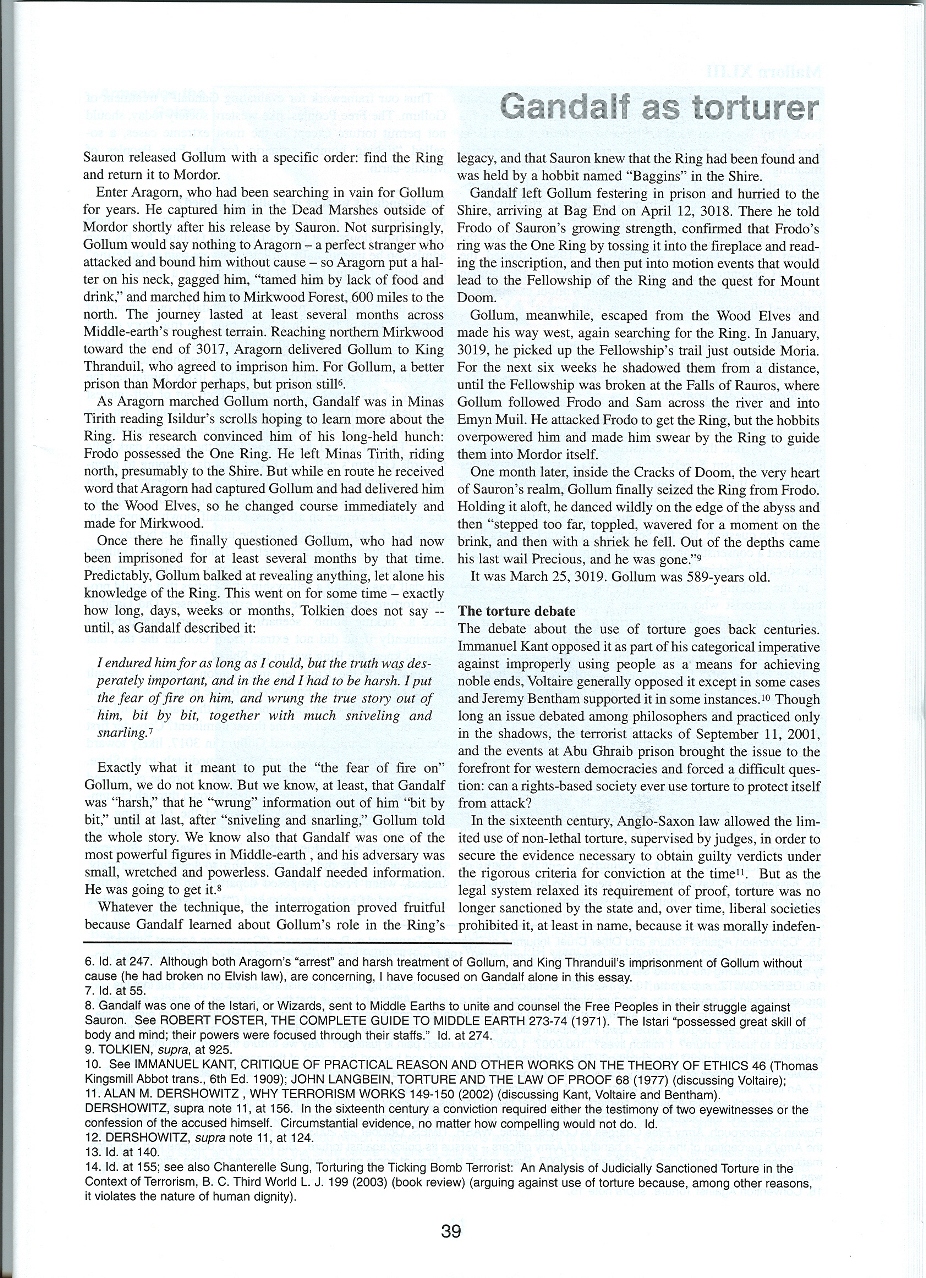
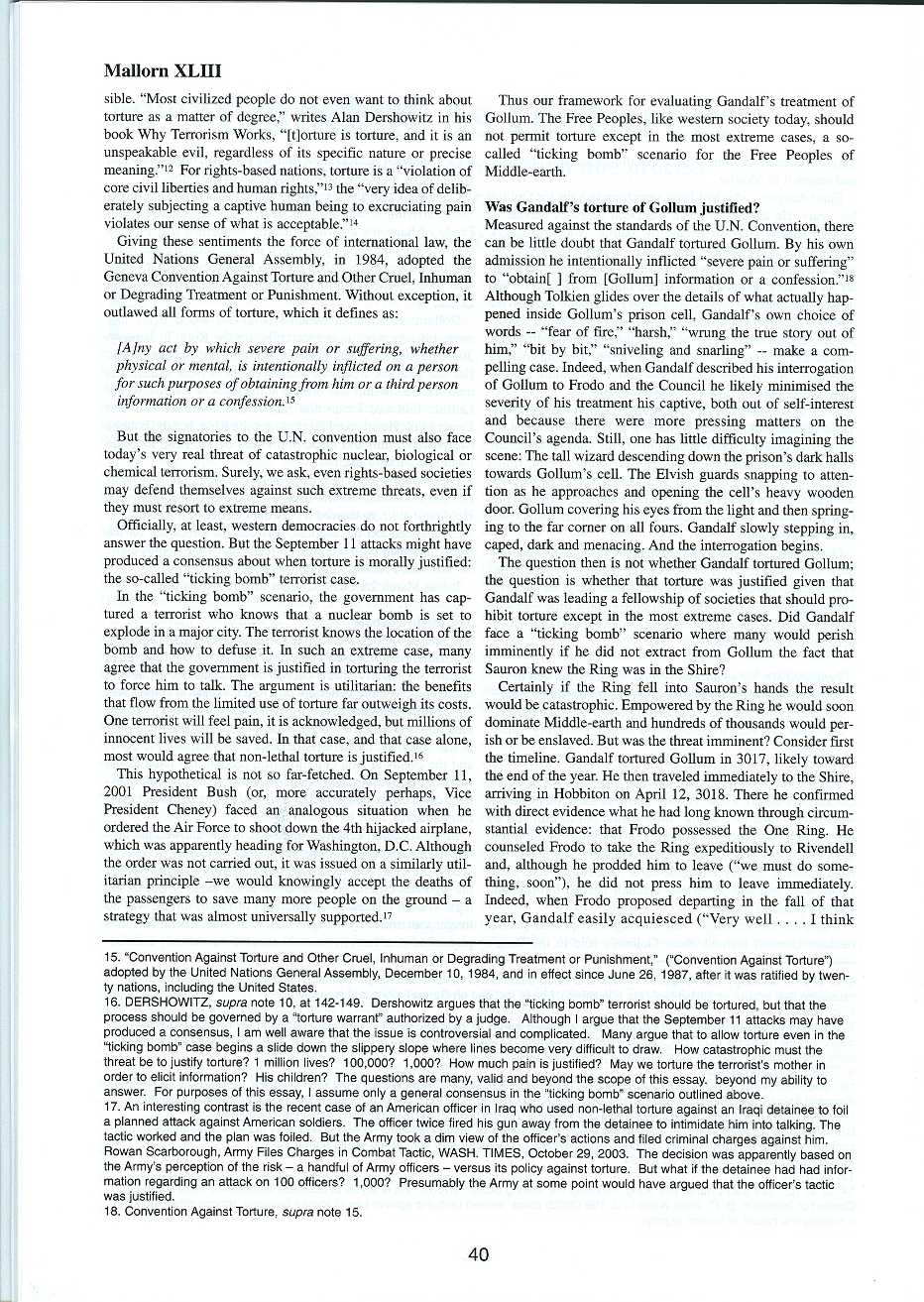
Are we so sure that the only interpretation of Gandalf's interrogation of Gollum is that it was torture? As we know from recent world events, and as this author points out, the definition of torture is a bit hard to pin down. But let's look at the relevant passage again:
. . . in the end I had to be harsh. I put the fear of fire on him, and wrung the true story out of him, bit by bit, together with much snivelling and snarling.
Now with most people being questioned, 'wrung the story out of him', and 'bit by bit', and all the snivelling and snarling does sound torturous. But I think we need to remember that every conversation with Gollum was like this. He was never straightforward, and the truth, if it emerged at all, emerged only obliquely and piecemeal. So this description does not necessarily support the allegation of torture.
Does Gandalf calling himself 'harsh' necessarily mean torture? Maybe he yelled! Maybe he got grumpy. I imagine he would have thought that some of his retorts to poor Pippin were harsh.
I submit to you that the whole allegation of torture relies on the line about 'I put the fear of fire on him'. I have no idea what this means. It sounds like it might be something to do with his Ring of Fire, though, doesn't it? But I have to say that I don't believe that Gandalf would threaten to burn Gollum, even if it were an empty threat. It is only three or four pages later that Gandalf speaks his memorable invocation to pity for Gollum. Tolkien was too smart a man to invite the judgment of hypocricy on Gandalf.
Remember that at this time, Gollum had lived underground for so long that he no longer enjoyed sunlight or moonlight. Could the 'fear of fire' have something to do with light rather than burning?
In any case, Tolkien abides by the principle all through his works that the ends do not justify the means. I don't even think that he would judge that torture in the 'doomsday' scenario was morally right. This is such a strong theme that I think we have to imagine that Gandalf would not have done anything that could have been called torture in any meaningful sense.
That's my story and I'm sticking to it! What say you?


 First off, I love Tolkien for the wonderful history he has created of a place I wish existed...Middle-earth and all the inhabitants in it. BUT........it is just that, a wonderful story. Trying to compare events that happened in his stories to current ones is
  . LoTR is 50 years old for heavens sakes, how can you compare???
 I'm sure he could have put his argument in a much better way.
  (Sorry for the violent metaphor!)