

The Hobbit Calendar Project
-
librislove
- Posts: 151
- Joined: Sun Sep 18, 2005 3:19 am
- Location: western PA
Great entry! Mirkwood, with all those insect eyes, always frightened more than anywhere else in Middle Earth. Spiders and crunchy bugs--
Many live who deserve death; some die who deserve life--can you give it to them, Frodo? Do not be so quick to deal out death in judgment. Even the wisest cannot see all ends.
-
Lindariel
- Posts: 1062
- Joined: Fri Sep 23, 2005 8:30 pm
- Location: The Hall of Fire, Imladris (otherwise known as Northern Virginia)
I know what you mean libris! I think the only place that scared me more was Shelob's lair, and once again, a giant spider was involved! The blight of Mordor and the dreaded plains of Gorgoroth were horrifying in their own way, but the horror came more from the terrible deprivation and the sheer punishment the landscape inflicted upon Frodo and Sam than from being scared that something awful was going to leap out at any moment.
No, you're right. Mirkwood is a singularly creepy place, and we will be spending the next three calendar entries engulfed in its horrors before Thranduil and his elves have the great kindness to capture the dwarves (with the invisible Bilbo following along) and relieve them of the terrors of Mirkwood.
No, you're right. Mirkwood is a singularly creepy place, and we will be spending the next three calendar entries engulfed in its horrors before Thranduil and his elves have the great kindness to capture the dwarves (with the invisible Bilbo following along) and relieve them of the terrors of Mirkwood.
Lindariel 
“Therefore I say: Eä! Let these things Be! And I will send forth into the Void the Flame Imperishable, and it shall be at the heart of the World, and the World shall Be.”
“Therefore I say: Eä! Let these things Be! And I will send forth into the Void the Flame Imperishable, and it shall be at the heart of the World, and the World shall Be.”
-
Iolanthe
- Uinen
- Posts: 2339
- Joined: Thu Aug 25, 2005 2:21 pm
- Location: Washing my hair in the Sundering Sea
 .
.-
Merry
- Varda
- Posts: 3263
- Joined: Wed Aug 17, 2005 7:01 am
- Location: Middle-west
I like RR's idea of putting the calendar posts in the Hobbit thread after they are published and having most of this discussion there. We could still discuss posts before they are published here--in the event that someone would want to change something, etc., before it was published. But we're having virtually no public conversation about the calendars, and they're too good for that!
Sing and be glad, all ye children of the West,
for your King shall come again,
and he shall dwell among you
all the days of your life.
for your King shall come again,
and he shall dwell among you
all the days of your life.
-
Iolanthe
- Uinen
- Posts: 2339
- Joined: Thu Aug 25, 2005 2:21 pm
- Location: Washing my hair in the Sundering Sea
August 16: TA 2941
The Company crosses the Enchanted Stream. Bomber falls into a trance..
 or
or 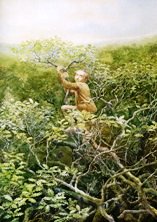
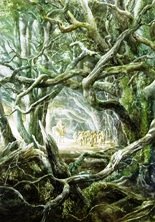
Gandalf has gone and the company has been left to cross Mirkwood without him, with the instruction ‘DON’T LEAVE THE PATH’ ringing in their ears. Mirkwood – the very name tells you everything you need to know about it: pitch black nights, stuffy and airless, alarmingly thick cobwebs, scuffling sounds and bulbous insect eyes in the dark. Bilbo and the dwarves endure seven oppressive but uneventful days of this, living off increasingly meagre rations, seeing no water and discovering that black squirrels (dark like all the other things living in the wood) are inedible.
On August 16 a black stream crosses their path but this is no welcome relief. Beorn has already warned them not to drink from it or bathe in it as it causes drowsiness and forgetfulness. But the bridge has gone and they are stuck. This seemingly unsolvable problem is a major tuning point for Bilbo. With Gandalf gone it’s now Bilbo who takes the initiative, seeing the oarless boat on the other side which the dwarves (despite all that tunnelling) don’t seem to have good enough eyesight to spot. In fact poorer sight is as much true of the dwarves rather negative and blinkered outlook as it is of their ability to spot a boat, as it is Bilbo again who solves the logistical problem of how to pull it over with rope and hook. In fact, from this point on, without Bilbo’s better view of each difficulty they get themselves into, the dwarves would never see their way out of Mirkwood let alone reach the Lonely Mountain.
They cross the water and all is going well until disaster strikes. A deer charges out of the wood and tries to leap the stream. While Thorin shoots it with an arrow all the others are bowled over and poor Bombur falls into the stream. Again it’s Bilbo that has the wits to see what’s going on in time to rescue him, but Bombur has now fallen into a deep sleep and they can’t rouse him. And it’s now clear the deer is being hunted as they hear the sound of horns and dogs but see nothing of the mysterious hunters. Things get even worse when a white hind with white fawns cross their path and the dwarves loose the last arrows given to them by Beorn without hitting the mark. They now have to plod on with their meagre rations while carrying Bombur who, we know, was not the lightest of dwarves.
The events at the stream are crammed full of things familiar to those that love mythology and fairy tales. Tolkien has drawn on them deeply here and in the space of a couple of pages gives us the Enchanted Steam (who’s mythological source is the classical Lethe, meaning ‘forgetfulness’, one of the rivers of Hades which brought oblivion if drunk from), the Elven Hunt (also the ‘Wild Hunt’, usually heard and best not seen as it could lead men astray and foretold calamity. Sometimes led by the Fairy King, sometimes by Cernunnos, the great antlered Celtic Lord of Animals, or by Herne the Hunter, the ‘Lord of the Wildwood’), and finally the White Hart (although Tolkien gives us a dark stag and a white hind, the white stag was the usual quarry of the Elven Hunt. It was bad luck to cross the White Hart’s path and it was a harbinger of doom, meaning that a taboo had been transgressed. By the time of the King Arthur legends it had come to symbolise the beginning of a quest or a search for the unobtainable).
Quite a lot of mythological associations to cram into one dwarvish accident at a stream! Although young readers wouldn’t know these associations, just the suggestion of them adds to the mystery and danger of the magical borders of Fairy Land and to wondrous possibilities.
The Company crosses the Enchanted Stream. Bomber falls into a trance..
or Gandalf has gone and the company has been left to cross Mirkwood without him, with the instruction ‘DON’T LEAVE THE PATH’ ringing in their ears. Mirkwood – the very name tells you everything you need to know about it: pitch black nights, stuffy and airless, alarmingly thick cobwebs, scuffling sounds and bulbous insect eyes in the dark. Bilbo and the dwarves endure seven oppressive but uneventful days of this, living off increasingly meagre rations, seeing no water and discovering that black squirrels (dark like all the other things living in the wood) are inedible.
On August 16 a black stream crosses their path but this is no welcome relief. Beorn has already warned them not to drink from it or bathe in it as it causes drowsiness and forgetfulness. But the bridge has gone and they are stuck. This seemingly unsolvable problem is a major tuning point for Bilbo. With Gandalf gone it’s now Bilbo who takes the initiative, seeing the oarless boat on the other side which the dwarves (despite all that tunnelling) don’t seem to have good enough eyesight to spot. In fact poorer sight is as much true of the dwarves rather negative and blinkered outlook as it is of their ability to spot a boat, as it is Bilbo again who solves the logistical problem of how to pull it over with rope and hook. In fact, from this point on, without Bilbo’s better view of each difficulty they get themselves into, the dwarves would never see their way out of Mirkwood let alone reach the Lonely Mountain.
They cross the water and all is going well until disaster strikes. A deer charges out of the wood and tries to leap the stream. While Thorin shoots it with an arrow all the others are bowled over and poor Bombur falls into the stream. Again it’s Bilbo that has the wits to see what’s going on in time to rescue him, but Bombur has now fallen into a deep sleep and they can’t rouse him. And it’s now clear the deer is being hunted as they hear the sound of horns and dogs but see nothing of the mysterious hunters. Things get even worse when a white hind with white fawns cross their path and the dwarves loose the last arrows given to them by Beorn without hitting the mark. They now have to plod on with their meagre rations while carrying Bombur who, we know, was not the lightest of dwarves.
The events at the stream are crammed full of things familiar to those that love mythology and fairy tales. Tolkien has drawn on them deeply here and in the space of a couple of pages gives us the Enchanted Steam (who’s mythological source is the classical Lethe, meaning ‘forgetfulness’, one of the rivers of Hades which brought oblivion if drunk from), the Elven Hunt (also the ‘Wild Hunt’, usually heard and best not seen as it could lead men astray and foretold calamity. Sometimes led by the Fairy King, sometimes by Cernunnos, the great antlered Celtic Lord of Animals, or by Herne the Hunter, the ‘Lord of the Wildwood’), and finally the White Hart (although Tolkien gives us a dark stag and a white hind, the white stag was the usual quarry of the Elven Hunt. It was bad luck to cross the White Hart’s path and it was a harbinger of doom, meaning that a taboo had been transgressed. By the time of the King Arthur legends it had come to symbolise the beginning of a quest or a search for the unobtainable).
Quite a lot of mythological associations to cram into one dwarvish accident at a stream! Although young readers wouldn’t know these associations, just the suggestion of them adds to the mystery and danger of the magical borders of Fairy Land and to wondrous possibilities.
© Artwork by Alan Lee
Now let the song begin! Let us sing together
Of sun, stars, moon and mist, rain and cloudy weather...
Of sun, stars, moon and mist, rain and cloudy weather...
-
librislove
- Posts: 151
- Joined: Sun Sep 18, 2005 3:19 am
- Location: western PA
Wonderful entry! I suspect Tolkien's children especially, but children in general, would have been far more conversant with the legends he retells and weaves so originally than kids today; these stories are out of vogue in education today....such a loss.
Many live who deserve death; some die who deserve life--can you give it to them, Frodo? Do not be so quick to deal out death in judgment. Even the wisest cannot see all ends.
-
Merry
- Varda
- Posts: 3263
- Joined: Wed Aug 17, 2005 7:01 am
- Location: Middle-west
I remember being kind of frustrated by this part of the book when I was a kid; it seemed that there was a much larger story going on, but we were never to be let in on it. And I had not been introduced to these mythic elements at that point in my life.
Sing and be glad, all ye children of the West,
for your King shall come again,
and he shall dwell among you
all the days of your life.
for your King shall come again,
and he shall dwell among you
all the days of your life.
-
Iolanthe
- Uinen
- Posts: 2339
- Joined: Thu Aug 25, 2005 2:21 pm
- Location: Washing my hair in the Sundering Sea
The mythic elements in this passage certainly add so much - you just know that the white hind and fawns are special, but are not told why. You want to know why the stream is enchanted, who owns the boat, who the huntsmen are....
The whole land of Faerie is just around the corner like something you can see out of the corner of your eye but vanishes when you try to look at it properly.
The whole land of Faerie is just around the corner like something you can see out of the corner of your eye but vanishes when you try to look at it properly.
Now let the song begin! Let us sing together
Of sun, stars, moon and mist, rain and cloudy weather...
Of sun, stars, moon and mist, rain and cloudy weather...
-
librislove
- Posts: 151
- Joined: Sun Sep 18, 2005 3:19 am
- Location: western PA
Calendar entry for August 22
Here is our entry for August 22--it goes with the pic of Bilbo in the tree. Thanks! librislove
AUGUST 22--THE COMPANY LEAVES THE PATH IN MIRKWOOD AT NIGHT
The four days after the Dwarves and Bilbo encounter the Wild Hunt and the enchanted stream are dismal indeed--little food or water, the endless dark and dank of Mirkwood, and the labor of carrying the sleeping Bombur. Add to that the eerie distant singing and laughter that they hear sometimes, which can only come from Elves, beings none of the party truly understand or trust.
Some hope is kindled when Bilbo climbs a tree to see if the "accursed forest" is nearing its boundary, but he sees only treetops and butterflies because the tree he is in grows in a valley. He and the disappointed Dwarves do not realize how near to the end they are; indeed they are very close to if not inside the borders of the Elven Kingdom of Thranduil, father of Legolas and one of the few golden-haired Elves in Middle Earth not of Galadriel's line.
On the fourth night out from the stream, the company finishes the last of the food and water, and the joyless morning brings only hunger, thirst, rain, and hopelessness. Only Bombur's waking provides an unexpected bright spot, and even this is blighted by his constant complaining and descriptions of the feast he was having in his dreams.
On the night of this fifth day, Bilbo and the Dwarves begin to see lights and to hear laughter and voices in the forest: Thranduil's Elves at their feast. Chasing the lights, the smell of food, and the sound of cheerful voices leads the group off the path into hopeless confusion. They are soon completely lost, as they were told they would be if they strayed from the path. Once again Bilbo is left behind in the melee,alone in the silence and darkness, and miserable. He does not realize he is on the brink of discovering his own particular greatness on this adventure.
As we have seen before, all the element of faerie are still here, with a special emphasis on the old injunction not to leave the appointed path or something bad will happen to you. But Dwarves never really listen, do they?
It has always intrigued me that the Mirkwood Elves are so different from those in LOTR and the Sil, and never more so than here where their teasing and somewhat malicious magic has far more in common with all the old tales of folkloric Elves than with Legolas and Galadriel. . . .What is the true nature of Elven magic in Tolkien's world, after all? And are the Elves in The Hobbit so different because it was originally a children's story only tangentially connected to the rest of the legendarium, and he chose not to substantially change their character when he linked the works later?
AUGUST 22--THE COMPANY LEAVES THE PATH IN MIRKWOOD AT NIGHT
The four days after the Dwarves and Bilbo encounter the Wild Hunt and the enchanted stream are dismal indeed--little food or water, the endless dark and dank of Mirkwood, and the labor of carrying the sleeping Bombur. Add to that the eerie distant singing and laughter that they hear sometimes, which can only come from Elves, beings none of the party truly understand or trust.
Some hope is kindled when Bilbo climbs a tree to see if the "accursed forest" is nearing its boundary, but he sees only treetops and butterflies because the tree he is in grows in a valley. He and the disappointed Dwarves do not realize how near to the end they are; indeed they are very close to if not inside the borders of the Elven Kingdom of Thranduil, father of Legolas and one of the few golden-haired Elves in Middle Earth not of Galadriel's line.
On the fourth night out from the stream, the company finishes the last of the food and water, and the joyless morning brings only hunger, thirst, rain, and hopelessness. Only Bombur's waking provides an unexpected bright spot, and even this is blighted by his constant complaining and descriptions of the feast he was having in his dreams.
On the night of this fifth day, Bilbo and the Dwarves begin to see lights and to hear laughter and voices in the forest: Thranduil's Elves at their feast. Chasing the lights, the smell of food, and the sound of cheerful voices leads the group off the path into hopeless confusion. They are soon completely lost, as they were told they would be if they strayed from the path. Once again Bilbo is left behind in the melee,alone in the silence and darkness, and miserable. He does not realize he is on the brink of discovering his own particular greatness on this adventure.
As we have seen before, all the element of faerie are still here, with a special emphasis on the old injunction not to leave the appointed path or something bad will happen to you. But Dwarves never really listen, do they?
It has always intrigued me that the Mirkwood Elves are so different from those in LOTR and the Sil, and never more so than here where their teasing and somewhat malicious magic has far more in common with all the old tales of folkloric Elves than with Legolas and Galadriel. . . .What is the true nature of Elven magic in Tolkien's world, after all? And are the Elves in The Hobbit so different because it was originally a children's story only tangentially connected to the rest of the legendarium, and he chose not to substantially change their character when he linked the works later?
Many live who deserve death; some die who deserve life--can you give it to them, Frodo? Do not be so quick to deal out death in judgment. Even the wisest cannot see all ends.
-
Merry
- Varda
- Posts: 3263
- Joined: Wed Aug 17, 2005 7:01 am
- Location: Middle-west
Nice entry, librislove! I like ending these with questions that might be discussed.
Our friend, Bat'leth, from Oxford had a theory about all of Bilbo's fears summed up: he would be eaten! But other than being miserable about being so hungry, it doesn't seem that Bilbo ever really feared starving to death very much.
Our friend, Bat'leth, from Oxford had a theory about all of Bilbo's fears summed up: he would be eaten! But other than being miserable about being so hungry, it doesn't seem that Bilbo ever really feared starving to death very much.
Sing and be glad, all ye children of the West,
for your King shall come again,
and he shall dwell among you
all the days of your life.
for your King shall come again,
and he shall dwell among you
all the days of your life.
-
librislove
- Posts: 151
- Joined: Sun Sep 18, 2005 3:19 am
- Location: western PA
Bilbo may fear starving--I still see and hear those bugs and spiders--facing them always made Bilbo my hero, since I cringe and yell for the nearest non-fearful person to remove whatever bug impinges on my space. But I will handle large snakes with no fear at all=--go figure...librislove, who spent last evening edging around an inoffensive and really quite pretty katydid in her kitchen. Don't know where katy is now--don't want to.
Many live who deserve death; some die who deserve life--can you give it to them, Frodo? Do not be so quick to deal out death in judgment. Even the wisest cannot see all ends.
-
Riv Res
- Manwë
- Posts: 2111
- Joined: Fri Jun 24, 2005 6:35 am
- Location: Walking the fields of the Pelennor with the King
 I especially like your thought provoking questions at the end.
  I do think Tolkien kept his Elves in The Hobbit on the light side for the sake of the imtentioned younger readers.
-
elentarivarda
- Posts: 33
- Joined: Wed Dec 26, 2007 2:22 am
- Location: Is this Heaven? No, it's Iowa. :D
August 23
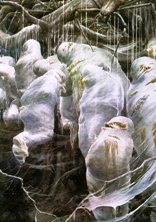
August 23: Before dawn Thorin is captured by the Wood-elves, and the other Dwarves by giant spiders. Bilbo rescues the Dwarves.
014hoblee.jpg
"I'll soon put an end to that," hissed the angry spider...
When Bilbo awakens, he finds he is caught in the trap of a giant spider, who is creeping toward him. Without a thought, he uses his sword to free himself and kill the spider. This victory leads Bilbo to name his sword "Sting".
When Bilbo goes to find the dwarves, he finds that they have been captured by the spiders too. Bilbo distracts the spiders by throwing stones at them and leads the spiders away from the dwarves by yelling. Bilbo is wearing his ring the whole time, so the spiders can't find him. Bilbo quietly returns to the dwarves and frees them, but the spiders return and the company begins to fight them off. After the spiders suddenly retreat, the company realizes they are in one of the areas used by the elves. They rest for a moment, trying to decide what to do next, when they realize that Thorin is missing.
They do not know that he was taken by the Elves.
This event marks the beginning of a new brave and courageous Bilbo. He doesn't think twice about freeing himself, slaying the spider, and saving the dwarves. His actions save the lives of the dwarves, again. This time, it was not by luck, but by bravery.
When Bilbo first finds the ring, it's magic helps him to escape the mountain. The dwarves look on him with a new confidence. But, this act was different. Bilbo did not rely on the magic to impress the dwarves, he actually stepped up and used his courage. He only used the ring to trick the spiders, when he knew he was unable to slay them all.
I think this is a milestone for Bilbo. He finally realizes what he's capable of. He uses his abilities and the tools that are around him to make quick decisions. This is very different from the forgetful, afraid Bilbo at the beginning of the story.
014hoblee.jpg
"I'll soon put an end to that," hissed the angry spider...
When Bilbo awakens, he finds he is caught in the trap of a giant spider, who is creeping toward him. Without a thought, he uses his sword to free himself and kill the spider. This victory leads Bilbo to name his sword "Sting".
When Bilbo goes to find the dwarves, he finds that they have been captured by the spiders too. Bilbo distracts the spiders by throwing stones at them and leads the spiders away from the dwarves by yelling. Bilbo is wearing his ring the whole time, so the spiders can't find him. Bilbo quietly returns to the dwarves and frees them, but the spiders return and the company begins to fight them off. After the spiders suddenly retreat, the company realizes they are in one of the areas used by the elves. They rest for a moment, trying to decide what to do next, when they realize that Thorin is missing.
They do not know that he was taken by the Elves.
This event marks the beginning of a new brave and courageous Bilbo. He doesn't think twice about freeing himself, slaying the spider, and saving the dwarves. His actions save the lives of the dwarves, again. This time, it was not by luck, but by bravery.
When Bilbo first finds the ring, it's magic helps him to escape the mountain. The dwarves look on him with a new confidence. But, this act was different. Bilbo did not rely on the magic to impress the dwarves, he actually stepped up and used his courage. He only used the ring to trick the spiders, when he knew he was unable to slay them all.
I think this is a milestone for Bilbo. He finally realizes what he's capable of. He uses his abilities and the tools that are around him to make quick decisions. This is very different from the forgetful, afraid Bilbo at the beginning of the story.
-
librislove
- Posts: 151
- Joined: Sun Sep 18, 2005 3:19 am
- Location: western PA

-
Merry
- Varda
- Posts: 3263
- Joined: Wed Aug 17, 2005 7:01 am
- Location: Middle-west
True! Again, children may not understand the etymology, but they would definitely get the sense of the word.
Good entry, elentarivarda! I don't think I've ever seen that picture before--yuk. But I think you're right about Bilbo--he seems to get through the spider business without being as creeped out as we are!
Good entry, elentarivarda! I don't think I've ever seen that picture before--yuk. But I think you're right about Bilbo--he seems to get through the spider business without being as creeped out as we are!
Sing and be glad, all ye children of the West,
for your King shall come again,
and he shall dwell among you
all the days of your life.
for your King shall come again,
and he shall dwell among you
all the days of your life.